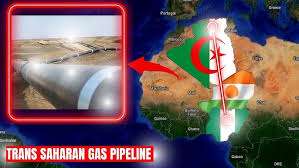
Algeria has officially launched construction of a new section of the $13 billion Trans-Saharan Gas Pipeline (TSGP), a major energy infrastructure project designed to transport Nigerian natural gas across Niger and Algeria to European markets. The development marks a significant milestone in one of Africa’s most ambitious cross-border energy projects.
The new construction phase forms part of the broader Trans-Saharan Gas Pipeline initiative jointly being developed by Nigeria, Niger, and Algeria. Once completed, the pipeline is expected to stretch approximately 4,128 kilometres from southern Nigeria through Niger to Algeria’s gas hub at Hassi R’Mel, where it will connect to existing export pipelines serving Europe.
The project is designed to transport up to 30 billion cubic metres of natural gas annually, providing Europe with an additional source of energy supply while creating new export opportunities for Nigeria’s vast gas reserves.
Algerian authorities described the latest construction launch as part of renewed efforts by the three participating countries to accelerate implementation of the long-delayed project amid growing global demand for diversified gas supplies. Recent engagements between energy ministers from Nigeria, Niger, and Algeria have focused on advancing the pipeline’s development and strengthening regional energy cooperation.
For Nigeria, the project is expected to unlock significant economic benefits by expanding access to international gas markets, increasing export revenues, attracting infrastructure investment, and supporting the country’s gas monetisation strategy. The pipeline aligns with Nigeria’s broader objective of leveraging its substantial natural gas reserves to drive industrialisation and economic diversification.
Industry analysts note that the Trans-Saharan Gas Pipeline could become one of Africa’s most strategic energy corridors, enhancing regional integration while strengthening energy security across both Africa and Europe. The project is also expected to stimulate investments in associated infrastructure, including gas processing facilities, transmission networks, and industrial development zones along the route.

Despite its enormous potential, the pipeline has faced delays over the years due to financing requirements, security concerns along parts of the route, and the complexity of coordinating a multi-country infrastructure project. However, renewed commitment from participating governments and rising demand for alternative gas supplies have helped revive momentum around the initiative.
Energy experts believe successful completion of the project could significantly strengthen Nigeria’s position in the global gas market while contributing to Africa’s growing role as a major energy supplier. The pipeline is also expected to complement other regional gas infrastructure projects aimed at expanding energy trade and economic cooperation across the continent.