
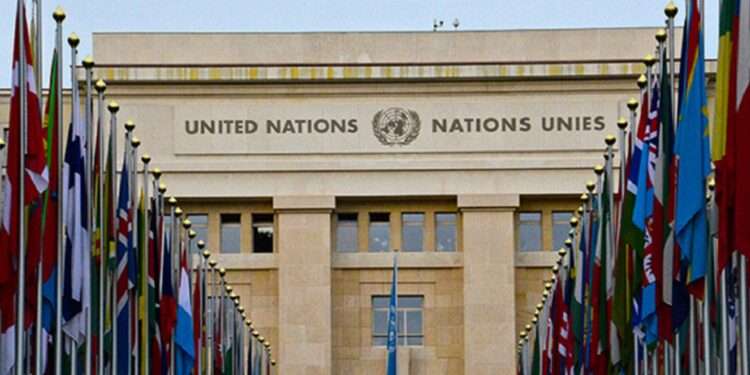
The United Nations has allocated up to $60 million from its emergency response fund to support efforts aimed at containing the ongoing Ebola outbreak linked to the rare Bundibugyovirus strain in Central Africa.
The emergency funding was announced by the UN Under-Secretary-General for Humanitarian Affairs and Emergency Relief Coordinator, Tom Fletcher, following the World Health Organization’s declaration of the outbreak as a Public Health Emergency of International Concern (PHEIC).
According to the United Nations Office for the Coordination of Humanitarian Affairs (OCHA), the funds will be deployed to strengthen containment and response operations in the Democratic Republic of the Congo (DRC) and neighbouring countries affected by the outbreak, including Uganda and South Sudan.
The outbreak, which originated in eastern DR Congo’s Ituri Province, has rapidly escalated in recent weeks. Health authorities have reported more than 670 suspected cases and approximately 160 suspected deaths, while confirmed infections have also been identified in Uganda.

Unlike the more common Zaire Ebola strain, the Bundibugyo strain currently driving the outbreak has no approved vaccine or targeted treatment, raising concerns among global health officials over the speed and scale of transmission.
Speaking on the intervention, Fletcher said the UN was moving quickly to stay ahead of the outbreak by deploying additional humanitarian personnel and reinforcing surveillance, early warning systems, laboratory testing, and community response mechanisms. He also noted that conflict and heavy population movement across affected areas were complicating containment efforts.
The World Health Organization has expressed concern over cases recorded in densely populated urban centres and among healthcare workers, warning that healthcare-associated transmission could further accelerate the spread of the disease if not urgently contained.
Humanitarian agencies are currently working with national governments and local communities to improve public awareness, strengthen contact tracing, and ensure safe access for frontline responders operating in conflict-affected regions. The Democratic Republic of the Congo has experienced more than a dozen Ebola outbreaks over the past five decades and is considered one of the world’s most experienced countries in Ebola surveillance and emergency response operations. However, experts say the current outbreak presents fresh challenges because of the absence of approved vaccines for the Bundibugyo strain and the difficult humanitarian environment in affected regions.